
Modern multiplayer games have evolved into complex digital ecosystems capable of supporting millions of concurrent players worldwide. Behind the immersive graphics and seamless gameplay lies a critical technical foundation: multiplayer scalability. At Fast Tract IT Services – FZCO, we analyze how high-performing gaming platforms achieve massive scale without sacrificing performance, reliability, or player experience.
The lessons learned from modern multiplayer architectures extend far beyond gaming—they offer valuable insights for any organization building high-traffic, real-time platforms.
Why Multiplayer Scalability Matters
Multiplayer environments are uniquely demanding. Unlike static websites or standard applications, multiplayer games require:
- Real-time communication
- Continuous state synchronization
- Instant responsiveness
- High concurrency support
Without effective multiplayer scalability, systems face crashes, lag spikes, and degraded user experiences—issues commonly seen in broader real-time system performance challenges

Lesson 1: Design for Concurrency from Day One
Handling Millions of Simultaneous Connections
Modern multiplayer games are designed with concurrency as a core principle. Every match, lobby, and in-game interaction generates network requests that must be processed in milliseconds.
Multiplayer scalability depends on:
- Asynchronous processing
- Non-blocking architectures
- Event-driven systems
Building scalability into the foundation prevents costly redesigns later.
Lesson 2: Use Distributed Architecture
Breaking the Monolith
Traditional monolithic architectures struggle to scale under unpredictable demand. Modern games use distributed systems where components such as matchmaking, chat, player statistics, and gameplay servers operate independently.
This approach improves multiplayer scalability by:
- Isolating failures
- Scaling services independently
- Reducing bottlenecks
Lesson 3: Auto-Scaling Is Essential
Responding to Traffic Spikes
Player activity fluctuates dramatically due to:
- New game releases
- Seasonal events
- Competitive tournaments
- Global time zone differences
Cloud-based infrastructure enables automatic scaling based on real-time demand, particularly within modern cloud gaming infrastructure environments.Multiplayer scalability improves significantly when resources expand and contract dynamically.

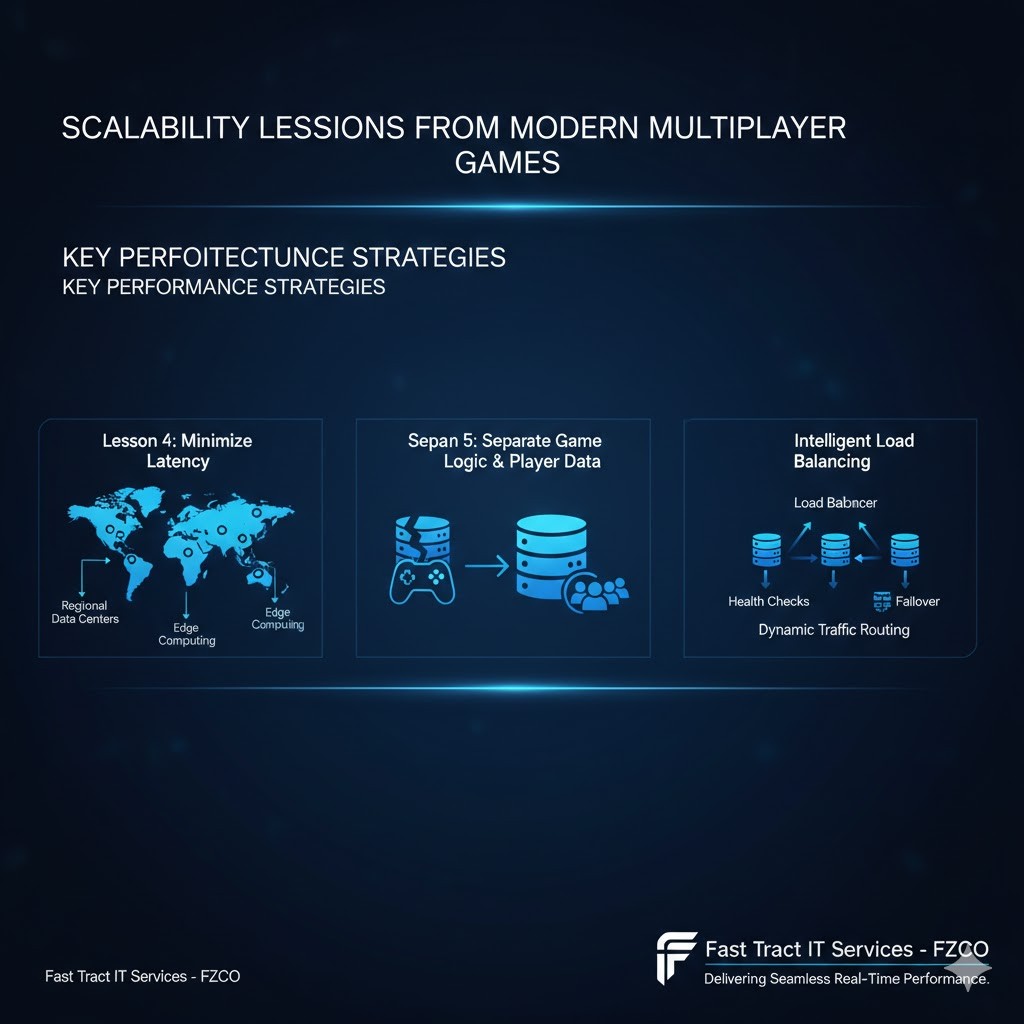
Lesson 4: Minimize Latency Through Smart Server Placement
Regional Data Centers
Latency is critical in multiplayer games. Even slight delays can disrupt competitive gameplay. Successful platforms deploy servers geographically closer to players to reduce round-trip times.
Edge Computing
Some modern architectures leverage edge nodes to process data closer to the end user, enhancing multiplayer scalability while maintaining performance consistency.
Lesson 5: Separate Game Logic from Player Data
Scalable Data Management
Player profiles, inventory systems, and leaderboards generate large volumes of data. Storing and processing this information separately from core gameplay servers prevents overload.
Databases optimized for high read/write throughput are crucial to supporting multiplayer scalability.
Lesson 6: Implement Intelligent Load Balancing
Load balancing distributes incoming traffic evenly across available servers. Without it, certain nodes become overloaded while others remain underutilized.
Advanced load balancing strategies include:
- Dynamic traffic routing
- Health checks and failover
- Session-aware balancing
These mechanisms are fundamental to sustaining multiplayer scalability under high demand.
Lesson 7: Build for Fault Tolerance
Failures Are Inevitable
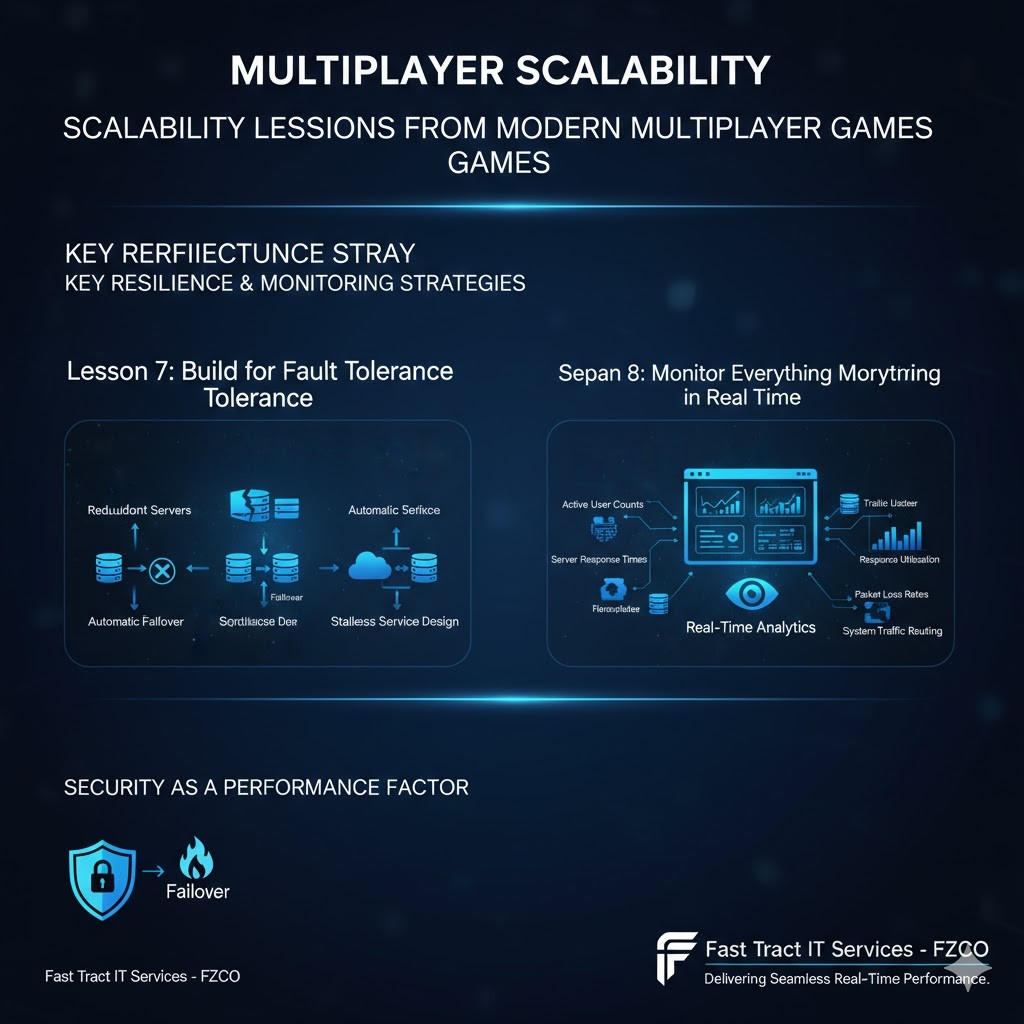
Hardware failures, network interruptions, and software bugs cannot be entirely eliminated. Modern multiplayer systems assume failures will occur and design for resilience.
Fault tolerance strategies include:
- Redundant servers
- Automatic failover systems
- Stateless service design
This approach ensures multiplayer scalability does not collapse during isolated disruptions.
Lesson 8: Monitor Everything in Real Time
Continuous monitoring is essential for maintaining multiplayer scalability. Successful platforms track:
- Active user counts
- Server response times
- Packet loss rates
- Resource utilization
Real-time analytics allow teams to address performance issues before players notice them.
Security and Scalability Must Work Together
Multiplayer environments are frequent targets for:
- DDoS attacks
- Cheating attempts
- Account takeovers
Security systems must protect platforms without degrading performance. Properly optimized security layers support multiplayer scalability rather than hinder it.
Applying Multiplayer Scalability Beyond Gaming
The principles behind multiplayer scalability apply to many industries, including:
- Financial trading platforms
- Live streaming services
- Real-time collaboration tools
- E-commerce during peak sales events
Any platform that experiences sudden traffic spikes can benefit from the architectural lessons learned in modern multiplayer ecosystems.
The Future of Multiplayer Scalability
Emerging technologies such as:
- 5G networks
- AI-driven traffic optimization
- Cloud-native microservices
- Edge computing
are redefining what multiplayer scalability can achieve. As player expectations continue to rise, infrastructure must evolve accordingly.
Conclusion
Multiplayer scalability is not simply about adding more servers—it is about designing resilient, distributed, and intelligent systems that can adapt to unpredictable demand. Modern multiplayer games demonstrate how thoughtful architecture, auto-scaling, latency optimization, and continuous monitoring work together to support millions of concurrent users.

At Fast Tract IT Services – FZCO, we help organizations apply multiplayer scalability principles to build high-performance digital platforms capable of thriving under intense traffic and real-time demands. By learning from the gaming industry’s most scalable systems, businesses can create infrastructure that is ready for the future.