
Real-time interactive applications are becoming the backbone of modern digital experiences—from online gaming and financial trading platforms to live collaboration tools and smart IoT networks. However, building and maintaining high-performing real-time systems presents significant technical and operational challenges. At Fast Tract IT Services – FZCO, we work with organizations that rely on real-time systems and understand how even minor performance issues can lead to major disruptions.
Delivering seamless real-time interaction requires precision, scalability, and continuous optimization.
What Are Real-Time Systems?
Real-time systems are computing environments designed to process data and deliver responses within strict time constraints. Unlike traditional systems that can tolerate delays, real-time systems must respond instantly or within predefined milliseconds.
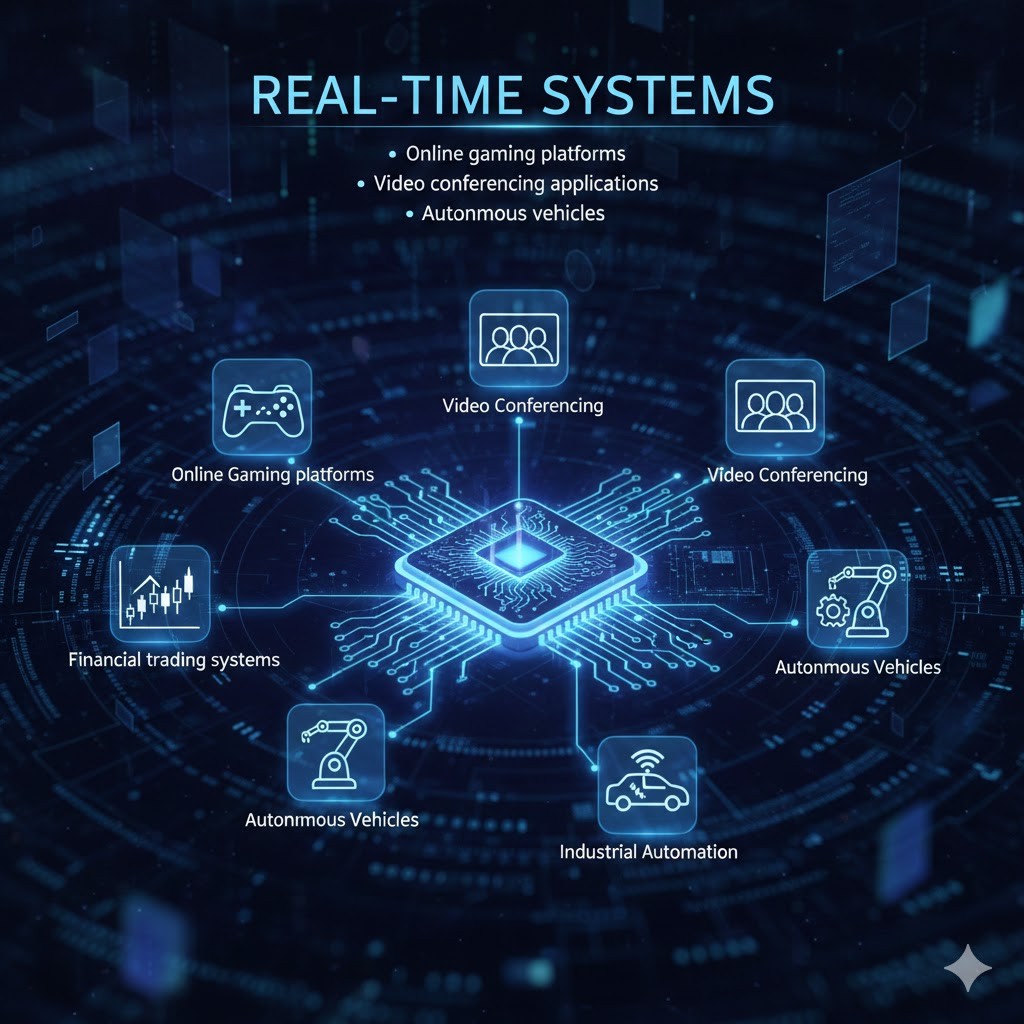
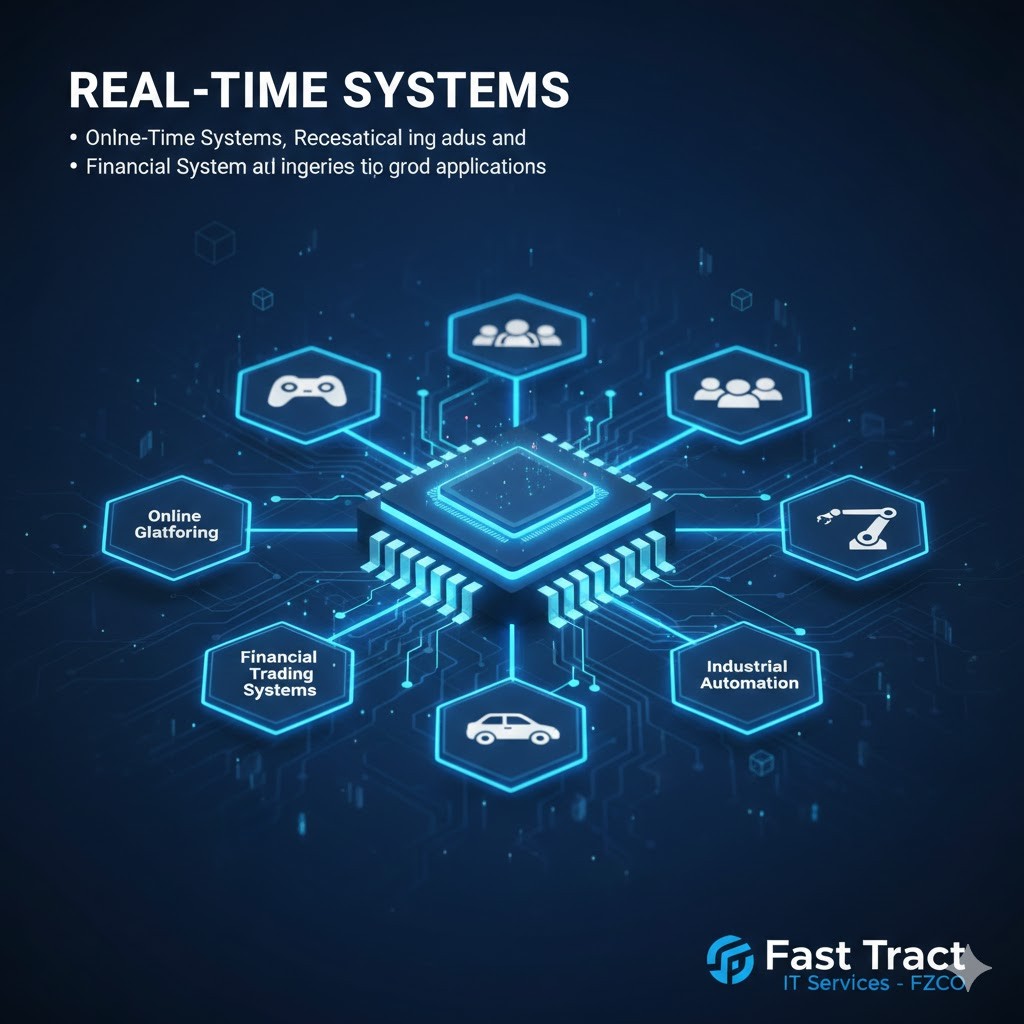
These systems are commonly used in:
- Online gaming platforms
- Video conferencing applications
- Financial trading systems
- Autonomous vehicles
- Industrial automation
Performance is not just about speed—it’s about predictability and reliability.
Why Performance Matters in Real-Time Systems
Latency Directly Impacts User Experience
In real-time systems, latency can result in:
- Lag during gameplay
- Delayed financial transactions
- Audio/video synchronization issues
- Control failures in automation systems
Even slight delays can severely degrade user trust and system effectiveness.
Consistency Is as Important as Speed
Performance spikes and drops are especially harmful. Real-time systems must maintain stable response times under varying loads to ensure consistent user experiences.
Key Performance Challenges in Real-Time Systems
1. Network Latency and Bandwidth Limitations
Real-time systems depend heavily on fast and reliable network connectivity. High latency or unstable connections can cause:
- Packet loss
- Delayed data transmission
- Reduced responsiveness
Distributed users and global platforms increase this complexity.
2. Scalability Under Traffic Surges
Real-time systems often face unpredictable spikes in usage. For example:
- Sudden increases in online players
- Market volatility in trading systems
- Viral live streaming events
Without dynamic scaling mechanisms, performance degradation is inevitable—particularly in platforms powered by modern cloud gaming infrastructure.
3. Data Processing Bottlenecks
Processing large volumes of data in milliseconds requires:
- Efficient algorithms
- Optimized databases
- High-performance computing resources
Poor system architecture can create bottlenecks that slow down real-time systems.
4. Synchronization Across Distributed Systems
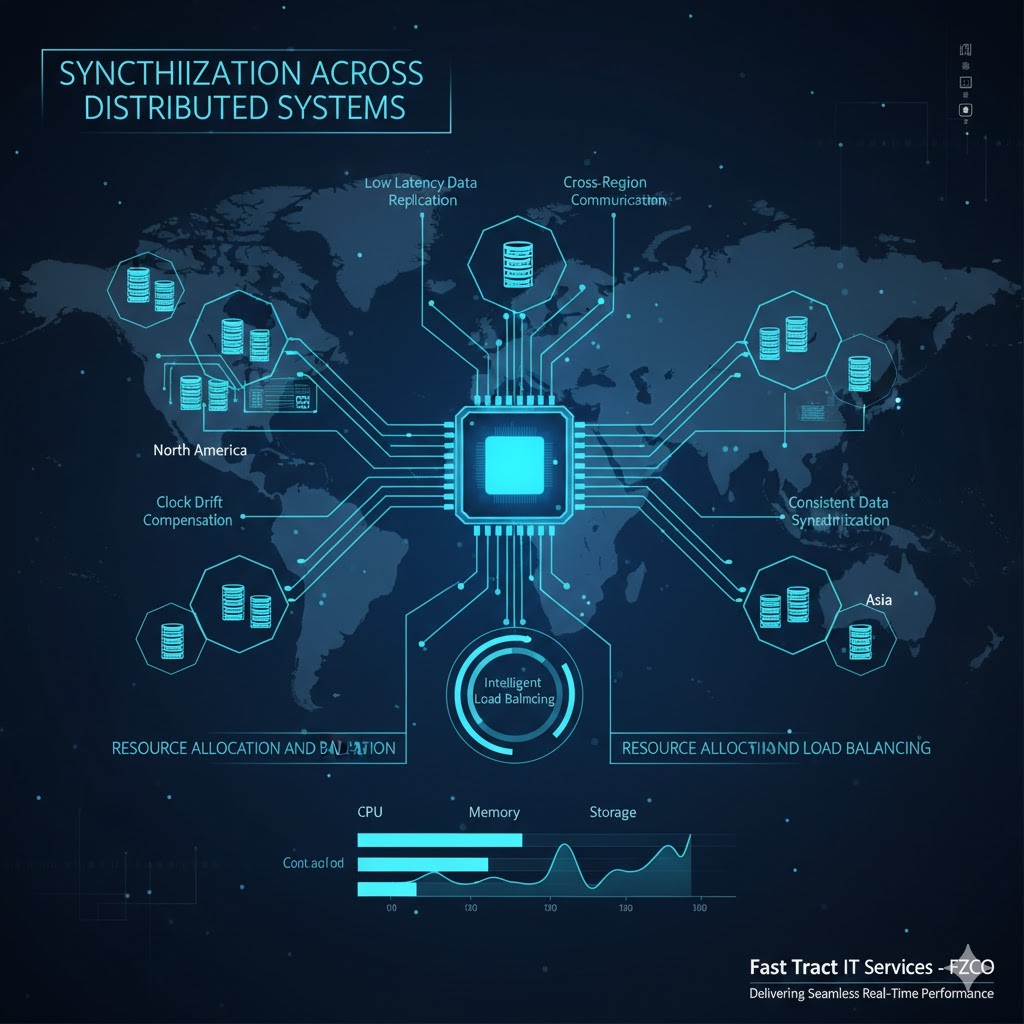
Many real-time systems operate across multiple servers and geographic regions. Ensuring consistent data synchronization while maintaining low latency is technically complex, especially in large-scale environments discussed in scalability lessons from modern multiplayer game architecture.
Clock drift, replication delays, and cross-region communication can all impact performance.
5. Resource Allocation and Load Balancing
Improper allocation of CPU, memory, or storage resources can cause uneven system performance. Intelligent load balancing is essential to distribute traffic efficiently.
Infrastructure-Level Challenges
Cloud vs On-Premise Trade-offs
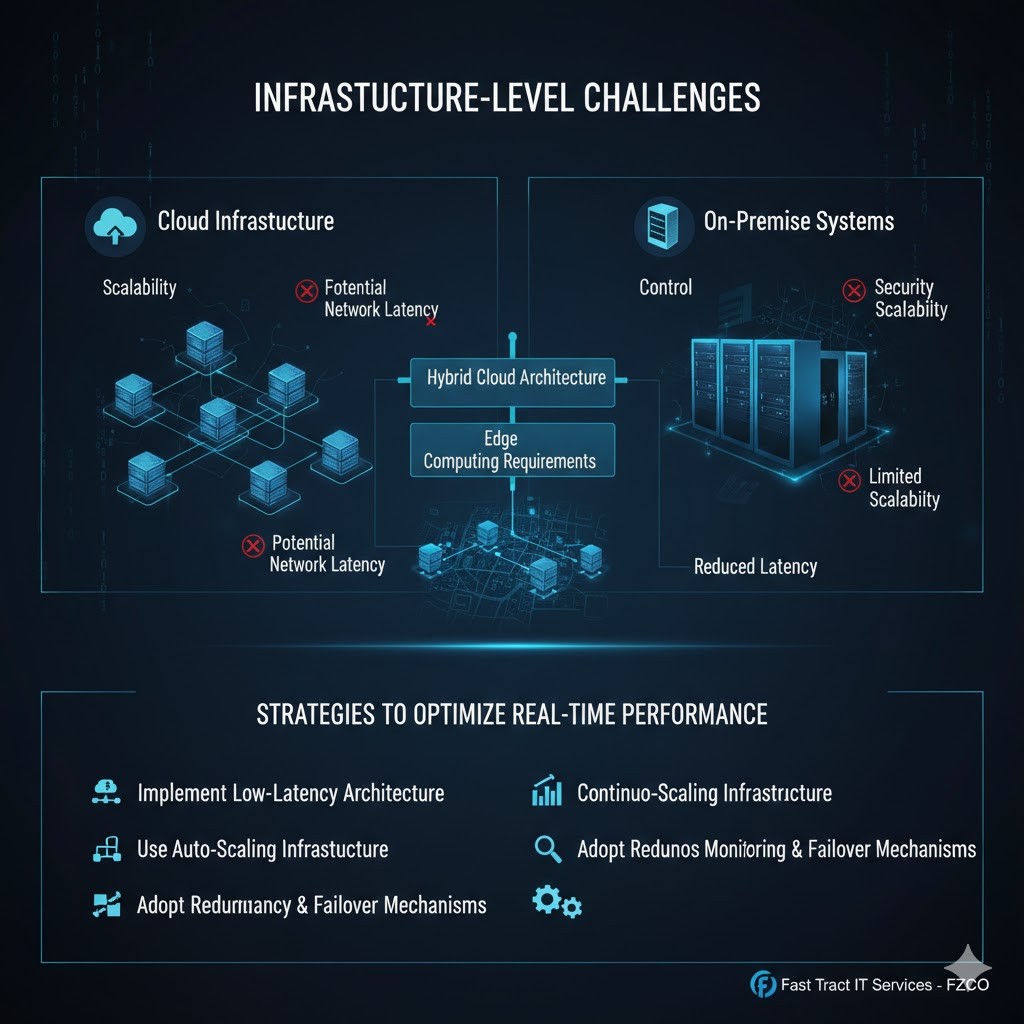
Cloud infrastructure provides scalability and flexibility but may introduce network latency depending on data center location. On-premise systems offer control but may lack scalability.
Choosing the right architecture is crucial for optimizing real-time systems.
Edge Computing Requirements
To reduce latency, many organizations deploy edge servers closer to users. However, managing distributed edge environments increases operational complexity.
Strategies to Overcome Performance Challenges
Implement Low-Latency Architecture
Optimized networking protocols, caching layers, and lightweight APIs help reduce delays in real-time systems.
Use Auto-Scaling Infrastructure
Dynamic scaling ensures computing resources expand or contract based on demand, preventing overload during peak activity.
Optimize Data Pipelines
Efficient data streaming platforms and in-memory processing reduce bottlenecks in high-throughput environments.
Continuous Monitoring and Performance Testing
Proactive monitoring tools track:
- Latency metrics
- Error rates
- Throughput levels
- System resource utilization
Regular load testing helps identify weaknesses before they impact users.
Adopt Redundancy and Failover Mechanisms
Failover systems ensure that if one component fails, another immediately takes over, maintaining uninterrupted performance.
Security as a Performance Factor
Security measures must be implemented without degrading speed. Poorly optimized encryption, firewalls, or authentication systems can slow down real-time systems if not configured properly.
Balancing security and performance is a critical challenge.
The Future of Real-Time Systems
Emerging technologies such as:
- 5G networks
- AI-driven optimization
- Advanced edge computing
- Distributed cloud architectures
are reshaping how real-time systems operate. These innovations promise lower latency and greater scalability but require strategic implementation.

Conclusion
Performance challenges in real-time systems are complex and multifaceted. From latency and scalability issues to infrastructure and synchronization hurdles, maintaining optimal performance demands careful planning and continuous optimization.
At Fast Tract IT Services – FZCO, we help organizations design, optimize, and manage real-time systems that deliver consistent, high-speed performance. By combining scalable infrastructure, intelligent monitoring, and resilient architecture, businesses can ensure their real-time applications operate seamlessly—even under the most demanding conditions.