The online gaming industry has evolved dramatically over the past decade. From simple multiplayer experiences to massive, real-time global ecosystems, gaming platforms now require enormous computing power and seamless performance. At Fast Tract IT Services – FZCO, we have seen how advancements in cloud gaming infrastructure are transforming the way online games are built, delivered, and scaled.
Cloud technology is no longer just a backend support system—it is the foundation of modern online gaming.
What Is Cloud Gaming Infrastructure?
Cloud gaming infrastructure refers to the servers, storage systems, networking components, and virtualization technologies hosted in the cloud that power online gaming platforms.
Instead of relying solely on local servers or player devices, gaming companies use distributed cloud systems to:
- Host multiplayer environments
- Process real-time data
- Stream high-quality graphics
- Store player progress and analytics
- Scale services globally
This shift enables developers to create more immersive and accessible gaming experiences.
Scalability: Supporting Millions of Players
Handling Traffic Spikes
Online games often experience sudden spikes in user activity during:
- New game launches
- Seasonal events
- Esports tournaments
- Promotional campaigns
Traditional infrastructure struggles to handle unpredictable traffic. Cloud gaming infrastructure allows automatic scaling of computing resources based on demand, preventing crashes and downtime—an approach reinforced by scalability lessons from modern multiplayer game architecture.

Global Reach Without Physical Expansion
Cloud providers operate data centers worldwide. This enables gaming platforms to deploy servers closer to players, reducing latency and improving performance without building physical infrastructure in every region.
Reducing Latency for Better Player Experience
Why Latency Matters in Gaming
In competitive online gaming, even milliseconds can determine the outcome. High latency results in issues commonly explored in modern real-time system performance challenges, including:
- Lag
- Delayed responses
- Poor user experience
Cloud gaming infrastructure uses distributed edge servers and optimized networking routes to minimize latency and deliver smoother gameplay.
Real-Time Processing Power
Cloud servers can process game logic, physics calculations, and player interactions in real time, ensuring consistent performance even during high-intensity gameplay.

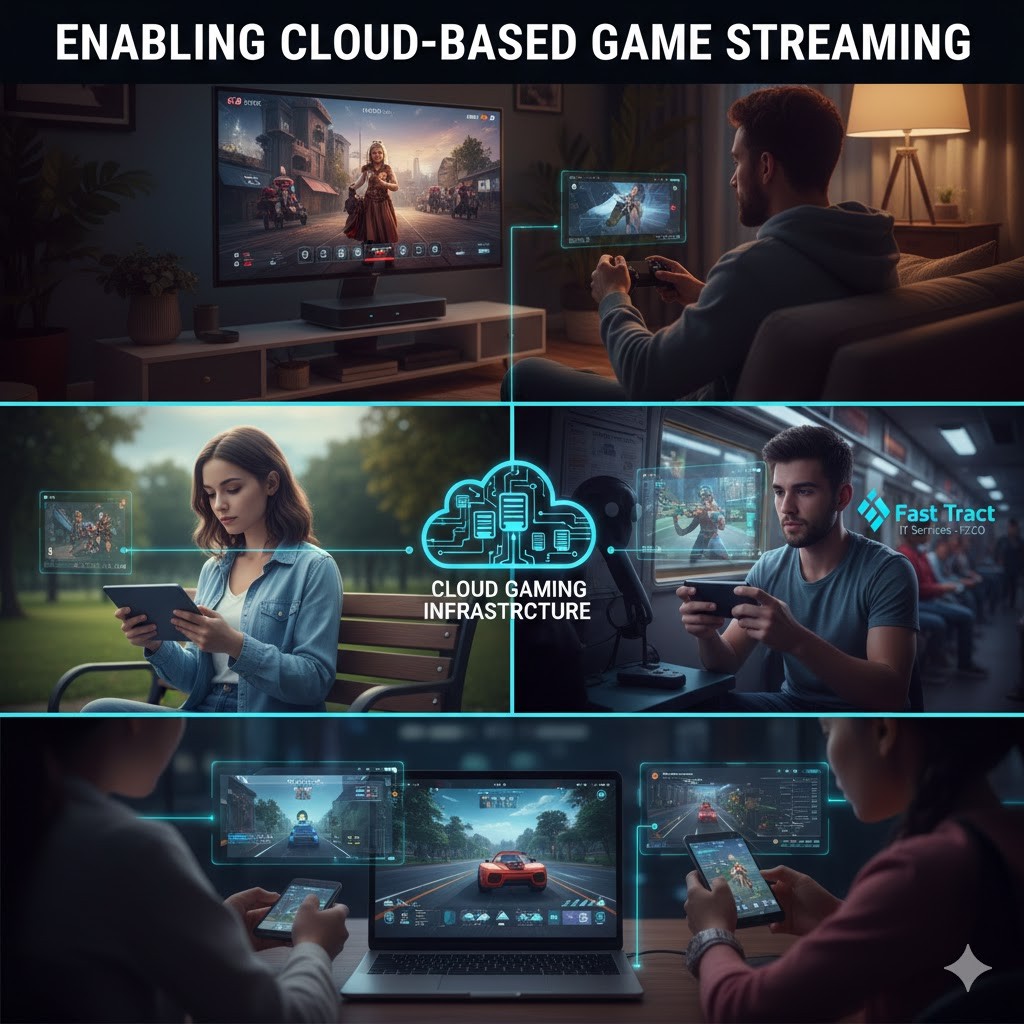
Enabling Cloud-Based Game Streaming
Gaming Without High-End Hardware
One of the most significant changes brought by cloud gaming infrastructure is the ability to stream games directly to devices.
Instead of requiring powerful gaming PCs or consoles, players can stream games through:
- Smartphones
- Tablets
- Smart TVs
- Low-spec laptops
The heavy processing happens in the cloud, making high-end gaming more accessible.
Expanding Market Reach
This model lowers the barrier to entry for players, allowing gaming companies to reach broader audiences and emerging markets.
Enhanced Security and Data Protection
Protecting Player Data
Online gaming platforms collect large amounts of sensitive data, including:
- Account information
- Payment details
- Gameplay statistics
Cloud gaming infrastructure integrates advanced security measures such as encryption, access control, and continuous monitoring to protect this data.
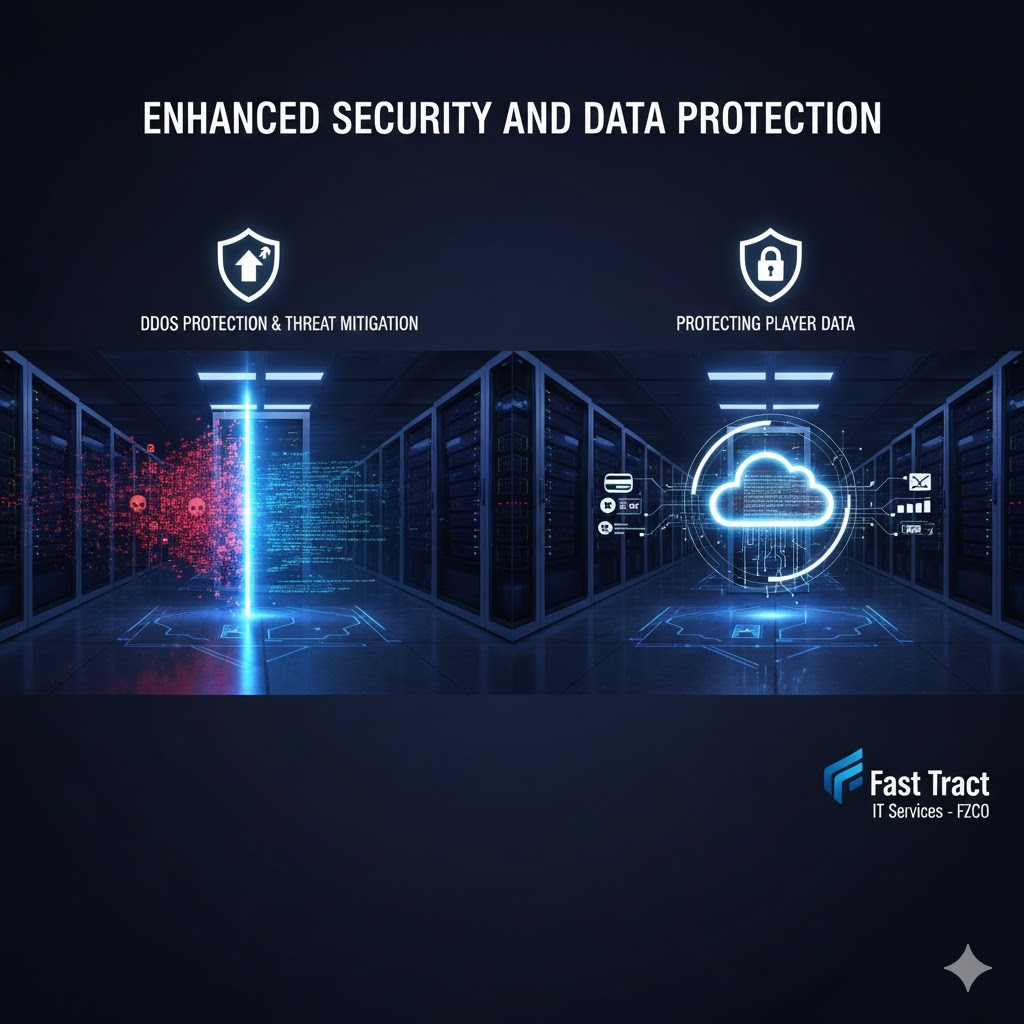
DDoS Protection and Threat Mitigation
Cloud providers offer built-in protection against distributed denial-of-service (DDoS) attacks, which are common in the gaming industry. This improves service availability and platform resilience.
Accelerating Game Development and Deployment
Faster Development Cycles
Cloud-based development environments allow game developers to collaborate globally. Teams can:
- Test builds in real time
- Deploy updates quickly
- Roll back changes if needed
This flexibility shortens development cycles and supports continuous updates.
Continuous Integration and Delivery (CI/CD)
Cloud gaming infrastructure supports automated deployment pipelines, enabling faster patch releases and feature enhancements without disrupting gameplay.
Data Analytics and Personalization
Real-Time Player Insights
Cloud platforms can analyze massive amounts of gameplay data instantly. Developers use this data to:
- Improve game balance
- Detect cheating
- Optimize performance
- Personalize player experiences
AI and Machine Learning Integration
Cloud environments make it easier to integrate AI-driven features such as dynamic matchmaking, behavior prediction, and adaptive gameplay systems.
Cost Efficiency and Operational Flexibility
Pay-as-You-Go Model
Instead of investing heavily in physical hardware, gaming companies can pay only for the cloud resources they use. This reduces upfront costs and improves budget predictability.
Lower Maintenance Burden
Cloud providers handle hardware maintenance, updates, and infrastructure management, allowing gaming companies to focus on innovation rather than infrastructure upkeep.
Challenges to Consider
While cloud gaming infrastructure offers numerous benefits, it also presents challenges:
- Dependence on internet stability
- Ongoing operational costs
- Data sovereignty regulations
- Complex architecture management
Careful planning and expert oversight are necessary to maximize benefits while minimizing risks.
The Future of Cloud Gaming Infrastructure
The future of online gaming will likely include:
- More immersive cloud-native games
- Expansion of 5G-powered mobile gaming
- Increased AI-driven gameplay experiences
- Deeper integration with virtual and augmented reality
Cloud gaming infrastructure will continue to serve as the backbone of these innovations.
Conclusion
Cloud technology is redefining how online gaming platforms operate, scale, and innovate. From improved scalability and reduced latency to enhanced security and global accessibility, cloud gaming infrastructure has become essential to the industry’s growth.
At Fast Tract IT Services – FZCO, we help organizations design and optimize cloud gaming infrastructure that delivers high performance, security, and scalability. As gaming continues to evolve, leveraging the right cloud strategy will determine which platforms thrive in this competitive digital landscape.