
Many enterprises rely on systems built years—or even decades—ago. These legacy platforms often power mission-critical operations, from finance and supply chain management to customer databases. However, as technology evolves, organizations face a difficult question: Is it time for legacy system modernization, or should the existing infrastructure remain in place?
At Fast Tract IT Services – FZCO, we help businesses evaluate modernization strategies carefully, ensuring decisions are driven by business value rather than industry pressure. Modernizing for the wrong reasons can be costly, while delaying necessary upgrades can limit growth and competitiveness within broader enterprise digital transformation strategies.
What Is Legacy System Modernization?
Legacy system modernization refers to the process of upgrading, refactoring, replatforming, or replacing outdated systems with more modern technologies. This can involve:
- Migrating to cloud infrastructure
- Rewriting applications using modern frameworks
- Integrating APIs for improved interoperability
- Improving security and compliance controls
However, modernization does not always mean complete replacement. In many cases, incremental improvements are more practical.
Signs It’s Time for Legacy System Modernization
1. Increasing Maintenance Costs
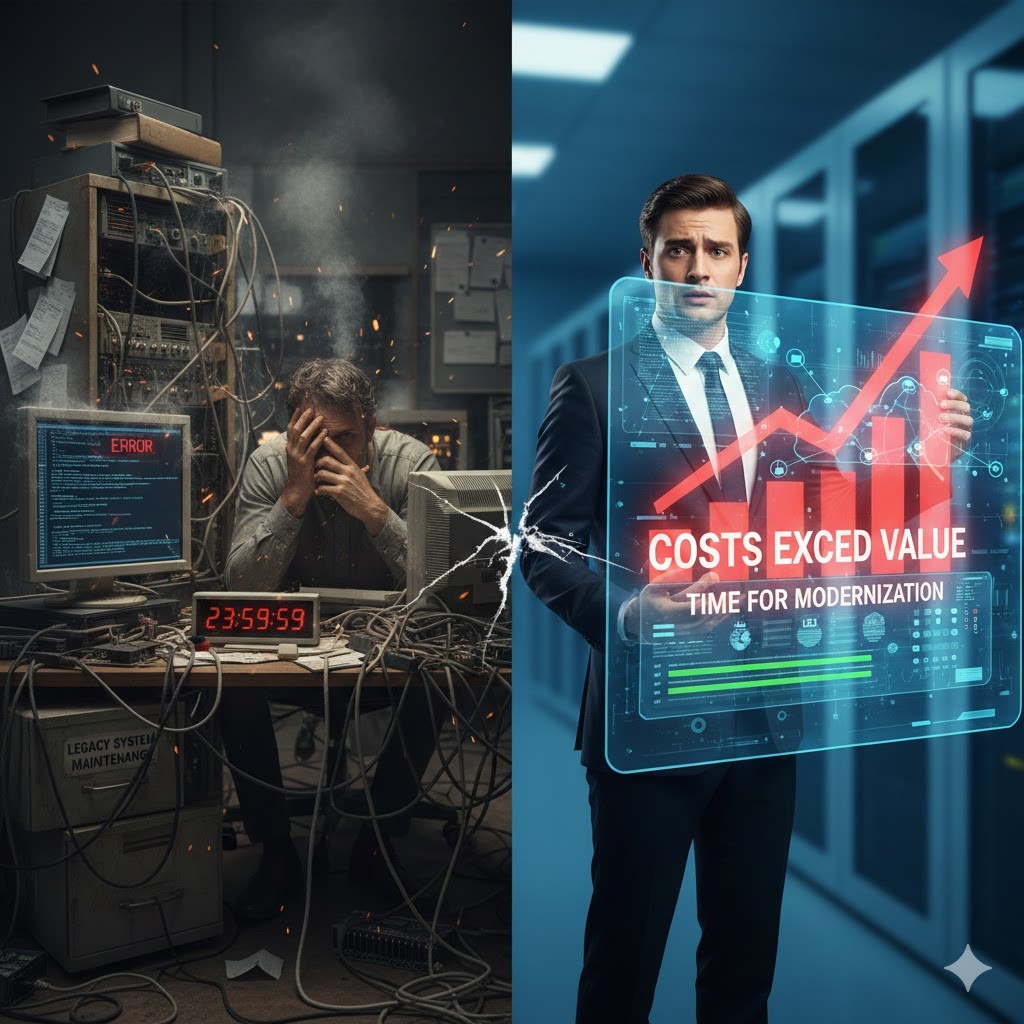
When maintenance costs exceed the value delivered by the system, legacy system modernization becomes a strategic priority. Frequent bug fixes, limited vendor support, and expensive hardware upkeep can drain resources.
If more time is spent maintaining the system than improving it, modernization should be considered.
2. Security Vulnerabilities
Older systems may lack modern security protocols. Unsupported software versions, weak encryption, and outdated authentication methods increase exposure to cyber threats.
If the system cannot meet current compliance requirements or cybersecurity standards, legacy system modernization may be essential.

3. Limited Scalability
Business growth often demands scalable infrastructure. Legacy systems may struggle to handle increased transaction volumes, user growth, or global expansion.
Cloud-enabled modernization can provide the flexibility and scalability required for future growth.

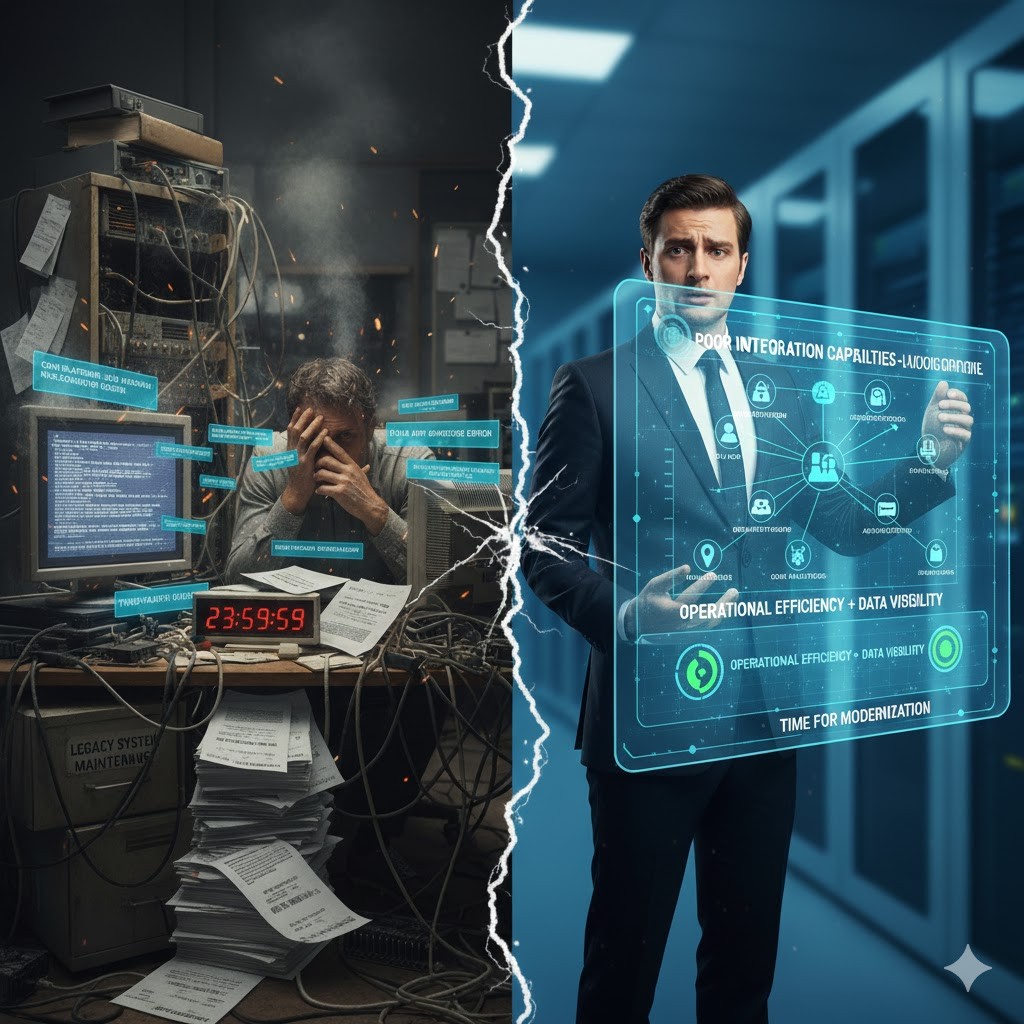
4. Poor Integration Capabilities
Modern enterprises depend on interconnected digital ecosystems. If legacy systems cannot integrate with:
- CRM platforms
- Cloud applications
- Data analytics tools
- Third-party APIs
then modernization may unlock operational efficiency and data visibility.
5. Slow Innovation Cycles
When outdated technology limits the ability to launch new features or respond to market changes, legacy system modernization becomes a competitive necessity.
When Legacy System Modernization May Not Be Necessary
1. The System Is Stable and Performing Well
If the legacy system is reliable, secure, and meeting business needs, modernization may not deliver sufficient ROI.
Modernization for the sake of trend adoption can introduce unnecessary risk and disruption.
2. High Replacement Risk
Mission-critical systems often carry significant operational risk. Replacing them without a clear transition strategy can disrupt business continuity.
In some cases, maintaining and optimizing the existing system is safer than full-scale modernization.
3. Budget Constraints and ROI Concerns
Legacy system modernization can require substantial investment. If projected benefits do not clearly outweigh costs, a phased or hybrid approach may be more appropriate.
4. Compliance or Regulatory Limitations
Certain industries operate within strict regulatory frameworks. Rapid modernization without proper compliance alignment can introduce legal and operational complications.
Modernization Strategies to Consider
Rehosting (“Lift and Shift”)
Moving legacy applications to the cloud without major code changes. This improves infrastructure flexibility while minimizing development effort.
Refactoring
Rewriting specific components of an application to improve performance, scalability, and maintainability.
Replatforming
Migrating systems to modern platforms while retaining core architecture.
Complete Replacement
In some cases, replacing the legacy system entirely with a modern solution may provide the greatest long-term benefit.
Choosing the right strategy depends on risk tolerance, budget, and long-term business goals—similar to the principles behind choosing the right technology stack from a business perspective.
Risk Management in Legacy System Modernization
Phased Implementation
Breaking modernization into smaller stages reduces disruption and allows for testing at each phase.
Hybrid Environments
Running legacy and modern systems simultaneously during transition helps ensure operational continuity.
Data Migration Planning
Data integrity must be preserved throughout modernization efforts. Structured migration strategies minimize data loss or corruption risks.
Balancing Innovation and Stability
Legacy system modernization should be guided by strategic analysis rather than urgency or industry trends. Organizations must evaluate:
- Business impact
- Security posture
- Operational efficiency
- Future scalability needs
A balanced approach ensures modernization delivers measurable value without unnecessary risk.
The Long-Term View of Legacy System Modernization
Modernization is not simply a technical upgrade—it is a strategic business decision. Enterprises that modernize thoughtfully can unlock improved agility, scalability, and competitive advantage. However, maintaining a stable and well-functioning legacy system may sometimes be the smarter choice.
At Fast Tract IT Services – FZCO, we help organizations assess when legacy system modernization aligns with business objectives—and when optimization is the better path. By combining strategic evaluation with technical expertise, businesses can make informed decisions that support long-term growth and operational resilience.