
In a digital-first business environment, protecting data is no longer just an IT concern—it’s a core business priority. At Fast Tract IT Services – FZCO, we work with organizations that face increasing pressure from cyber threats, compliance requirements, and operational risks. Among the many security measures available, three concepts are mentioned most often in data protection discussions: backup, encryption, and access control. But what role does each one really play, and which matters most?
Understanding how these elements work together is essential for building a reliable and resilient data protection strategy.
Why Data Protection Matters in Modern Businesses
Data is one of the most valuable assets a company owns. Customer information, financial records, operational data, and intellectual property all require strong data protection to prevent misuse or loss.
When data protection fails, organizations may face:
- Costly downtime and data recovery efforts
- Regulatory fines and legal consequences
- Loss of customer trust
- Long-term reputational damage
Effective data protection is not about a single tool—it’s about a structured, layered approach.

Backup: Ensuring Data Can Be Recovered
What Is Backup?
A backup is a duplicate copy of data stored separately from the original source. It allows businesses to restore information after incidents such as system failure, human error, or cyberattacks.
Why Backup Is Critical to Data Protection
Backups protect against:
- Accidental deletion
- Hardware or software failure
- Ransomware attacks
- Natural disasters
Without backups, lost data may be impossible to recover, making backup a foundational element of data protection.
The Limits of Backup Alone
Backup does not stop attackers from accessing or stealing data, particularly in environments exposed to evolving cloud database security threats. It only helps after damage has already occurred, which is why backup alone is not sufficient for full data protection.

Encryption: Keeping Data Unreadable
What Is Encryption?
Encryption transforms readable data into an unreadable format using cryptographic algorithms. Only authorized users with the correct keys can decrypt and access the information.
Encryption’s Role in Data Protection
Encryption protects data:
- At rest, such as in databases or storage systems
- In transit, when data moves across networks
Even if attackers gain access, encrypted data remains unusable without the decryption keys.
Common Encryption Gaps
Encryption can fail when:
- Encryption keys are poorly managed
- Only partial datasets are encrypted
- Access to encrypted data is not restricted
Encryption strengthens data protection, but only when combined with proper controls and policies.

Access Control: Preventing Unauthorized Access
What Is Access Control?
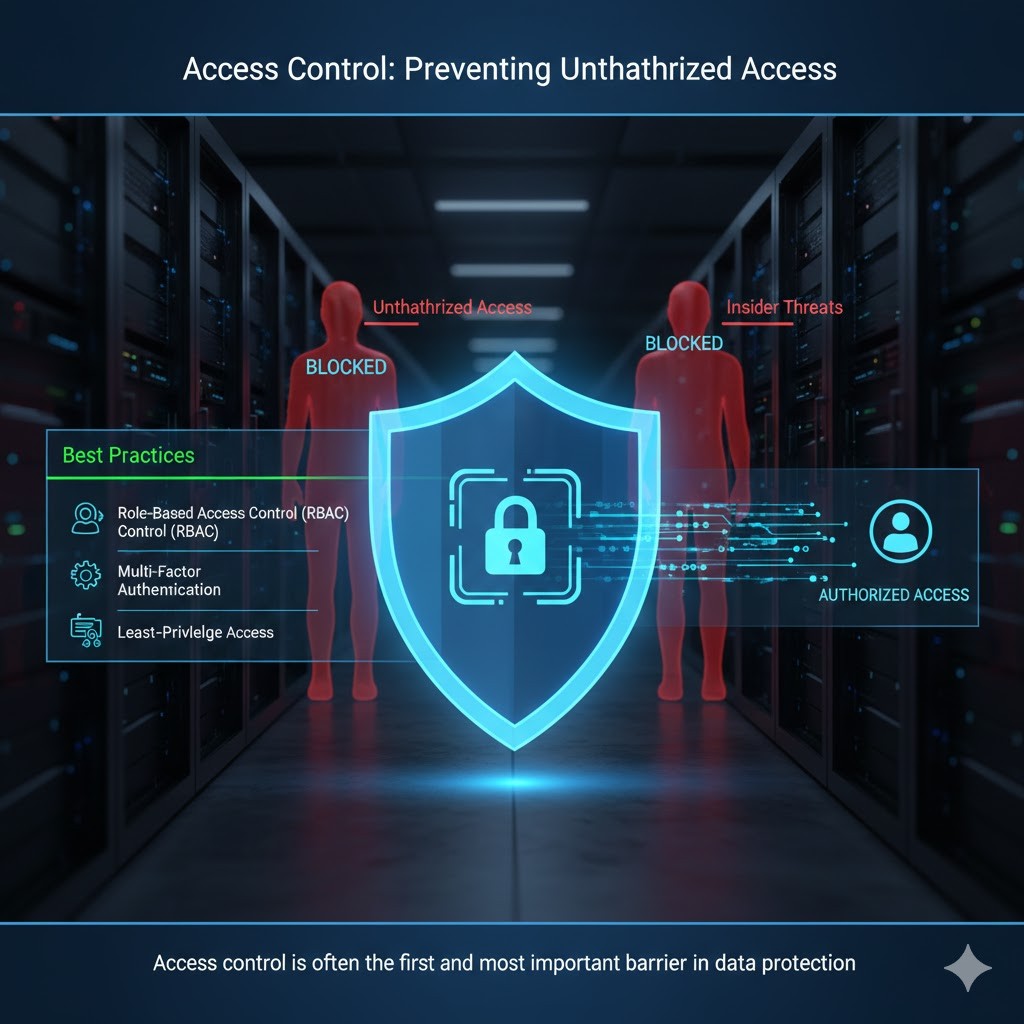
Access control defines who can access data and what actions they are allowed to perform. It includes authentication and authorization mechanisms.
Why Access Control Is Central to Data Protection
Many data breaches occur not because systems were hacked, but because access permissions were too broad. Strong access control helps prevent:
- Unauthorized access
- Insider threats
- Credential misuse
Best Practices for Access Control
- Role-based access control (RBAC)
- Multi-factor authentication (MFA)
- Least-privilege access
- Regular review of user permissions
Access control is often the first and most important barrier in data protection.
Backup, Encryption, and Access Control: Which Matters Most?
They Serve Different Purposes
Each component of data protection addresses a different risk:
- Backup ensures data recovery
- Encryption protects data confidentiality
- Access control prevents unauthorized access
Removing any one of these creates a serious security gap.
The Risk of Focusing on Only One
- No backup → Permanent data loss—an issue that continues to expose a broader database security blind spot for many companies.
- No encryption → Stolen data is readable
- No access control → Anyone can access sensitive data
Effective data protection requires all three working together.
Building a Balanced Data Protection Strategy
Layered Security Approach
A strong data protection model includes:
- Access control to limit who can get in
- Encryption to protect data if access is compromised
- Backup to restore data if systems fail
Continuous Review and Improvement
Security environments change constantly. Regular testing of backups, encryption policies, and access controls is essential to maintain effective data protection.
Compliance and Governance
Regulations such as GDPR, HIPAA, and ISO standards require organizations to demonstrate strong data protection practices, making backup, encryption, and access control equally important.
Conclusion: A Complete View of Data Protection
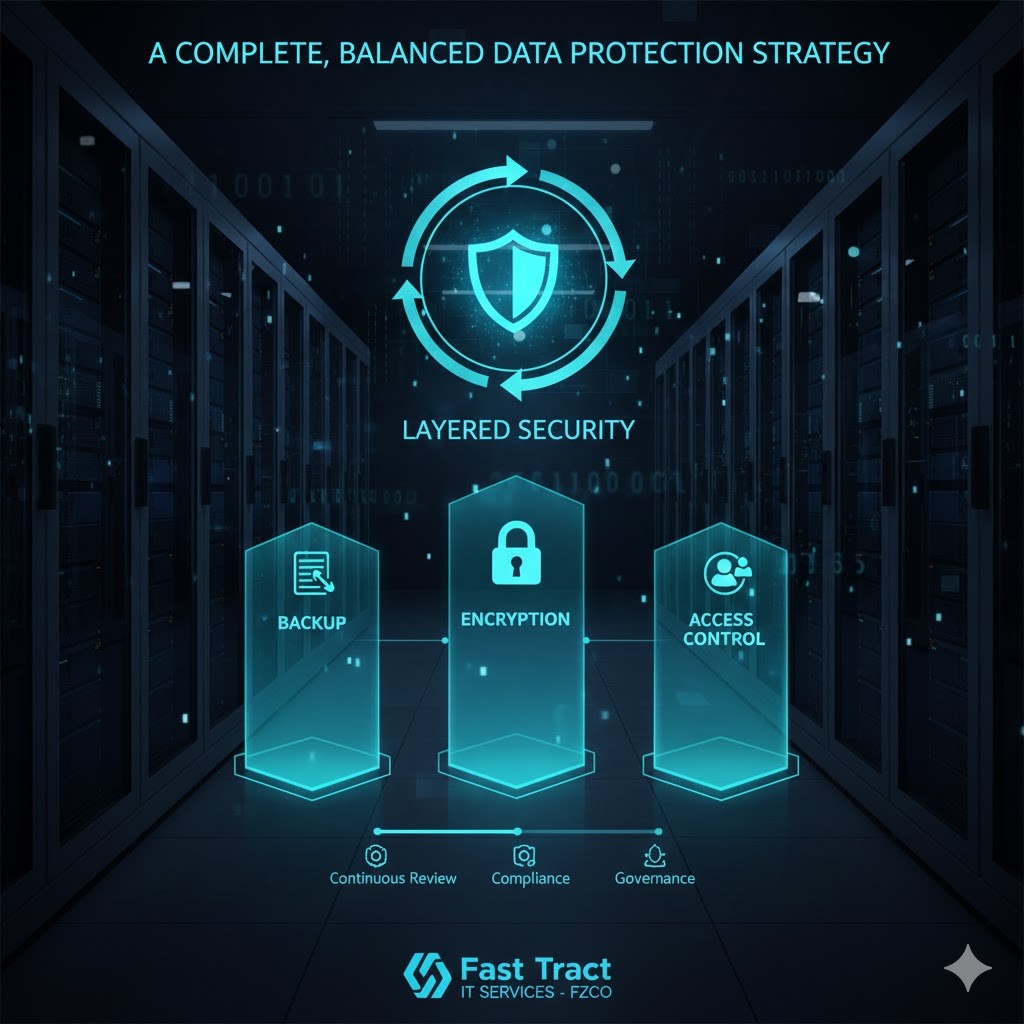
There is no single solution that defines effective data protection. Backup, encryption, and access control are not competing priorities—they are complementary pillars that must work together.
At Fast Tract IT Services – FZCO, we help organizations design data protection strategies that balance prevention, protection, and recovery. By understanding the role of each security layer, businesses can reduce risk, improve resilience, and protect what matters most—their data.